





IHBC responds to conservation critique
In April 2018, IHBC Chair James Caird wrote to the local paper that featured ‘joke’ comments from a Coventry City councillor linked to the sudden departure of the local conservation officer and recent listings by the Department for Digital, Culture, Media and Sport (DCMS) that, in the councillor’s opinion, threaten his promotion of the redevelopment in the city’s Upper Precinct area.
The Coventry Observer wrote:
‘… We can reveal conservation officer of 14 years, Chris Patrick, has left Coventry City Council, with City of Culture year 2021 awaiting…
‘There have been tensions between council plans for economic development and the city’s heritage – and an increasingly bitter fall-out….
‘… Coun O’Boyle, Labour cabinet member for jobs and regeneration … insists developer Shearer Property Group’s scheme would be in keeping with Upper Precinct’s pioneering and much-celebrated post-war character…’
‘… Then along comes Historic England… they like the buildings so much they want to list them… but don’t let the truth get in the way of their arcane hobby’.
In response, IHBC's James Caird wrote:
'The IHBC – the UK’s professional body for built and historic environment conservation specialists – is surely not alone in regretting the superficial way in which the heritage issues in Coventry City centre are being debated by some city councillors. Heritage is a very important component of our culture the value of which is widely recognised, not least by its inclusion as a major feature of our planning law. This determines in a structured way how heritage buildings and places are chosen for protection and conservation and how subsequent decisions are made.
'Despite heritage places tending to be attractive the public, some developers unfortunately regard heritage as a problem rather than an asset to be capitalised on. Sometimes this is because they lack the skills needed to handle heritage issues in a considered manner. It is understandable that elected members are sensitive to threats of investment and job losses, but the proper reaction to situations like this is for developers and local authority conservation staff to work together to resolve the issues.
'So, reports of conservation staff leaving their posts and councillors criticising national heritage policy from a developers standpoint are not helpful.
'In fact, many of the issues raised by Councillor O’Boyle could be cost-effectively dealt with through a Listed Building Consent Order, issued by the local authority, granting listed building consent for shop-fitting and other regular alterations that would otherwise need listed building consent each time.
'Coventry lost a great deal of its heritage in the 1940s and has been keen, until now, to build new culture from the old. This has been recognised by its being named City of Culture for 2021. The IHBC hopes the City will continue to honour its cultural obligations and commitments.'
This article was originally published here by IHBC on 6th April 2018.
--Institute of Historic Building Conservation
[edit] Find out more
[edit] Related articles on Designing Buildings Wiki
IHBC NewsBlog
IHBC sponsors Gardens Trust event 23-4 Sept 2026
.jpeg)
'Learning from the Past, Shaping the Future’ takes place in Milton Keynes
Renovations to Frank Lloyd Wright's Fallingwater complete
.jpg)
World Heritage Preserved project opens house for tours again
Shakespeare Birthplace Trust places Hall's Croft on HAR Register
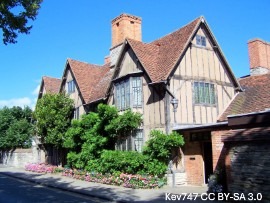
Stratford-upon-Avon home of Shakespeare's daughter is 'At Risk'
Lady Grange’s House repaired on St Kilda
.jpg)
National Trust for Scotland repairs stone cleit with link to famous island resident
Griff Rhys Jones on BBC Radio 4 Today programme
,_Green_Lane,_Derby.jpg)
The Victorian Society’s President unveiled its latest Top Ten Endangered Buildings 2026.
Need a MATE? Book your place now.
IHBC offers free webinars on applying for IHBC accreditation (Full & Associate).
UK Stained Glass Repository finds windows new homes
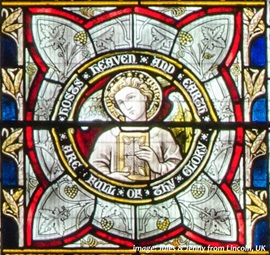
How are stained glass windows are rescued, stored and repurposed?
APPGEBE report sets high aims for quality
'Government must not sacrifice quality in drive to build 1.5m homes'
New measures protect Historic Shipwrecks from heritage crime

Underwater cultural heritage benefits from new HE guidance
How could the City of London skyline look in 6 years' time?

Visualisation shows approved planning applications as completed buildings
National Trust for Scotland calls for VAT cuts

Heritage neglect is encouraged by current policies
IHBC's 'Context' Issue 186 features Industrial Heritage
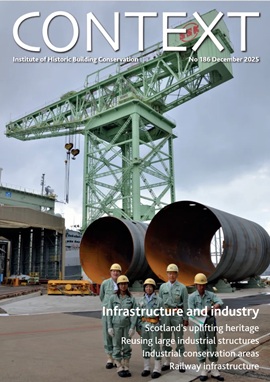
IHBC's members' journal reports on the challenges of conserving infrastructure
Book now for IHBC Annual School 2026

IHBC Annual School is taking place 18-20 June 2026 in Newcastle
RICHeS Research Infrastructure offers ‘Full Access Fund Call’

RICHeS offers a ‘Help’ webinar on 11 March
Latest IHBC Issue of Context features Roofing
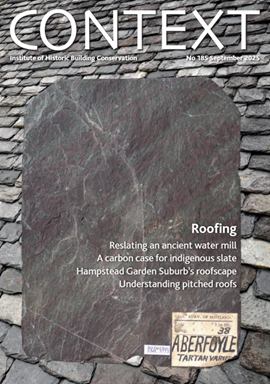
Articles range from slate to pitched roofs, and carbon impact to solar generation to roofscapes
Three reasons not to demolish Edinburgh’s Argyle House

Should 'Edinburgh's ugliest building' be saved?
IHBC’s 2025 Parliamentary Briefing...from Crafts in Crisis to Rubbish Retrofit
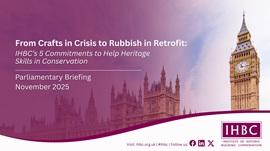
IHBC launches research-led ‘5 Commitments to Help Heritage Skills in Conservation’
How RDSAP 10.2 impacts EPC assessments in traditional buildings

Energy performance certificates (EPCs) tell us how energy efficient our buildings are, but the way these certificates are generated has changed.